The river and the gorges
Between Ferentillo and Arrone the Nera runs narrow between rock walls: the gorges that shaped and named the valley, crossed by trails, mule tracks and ancient bridges.
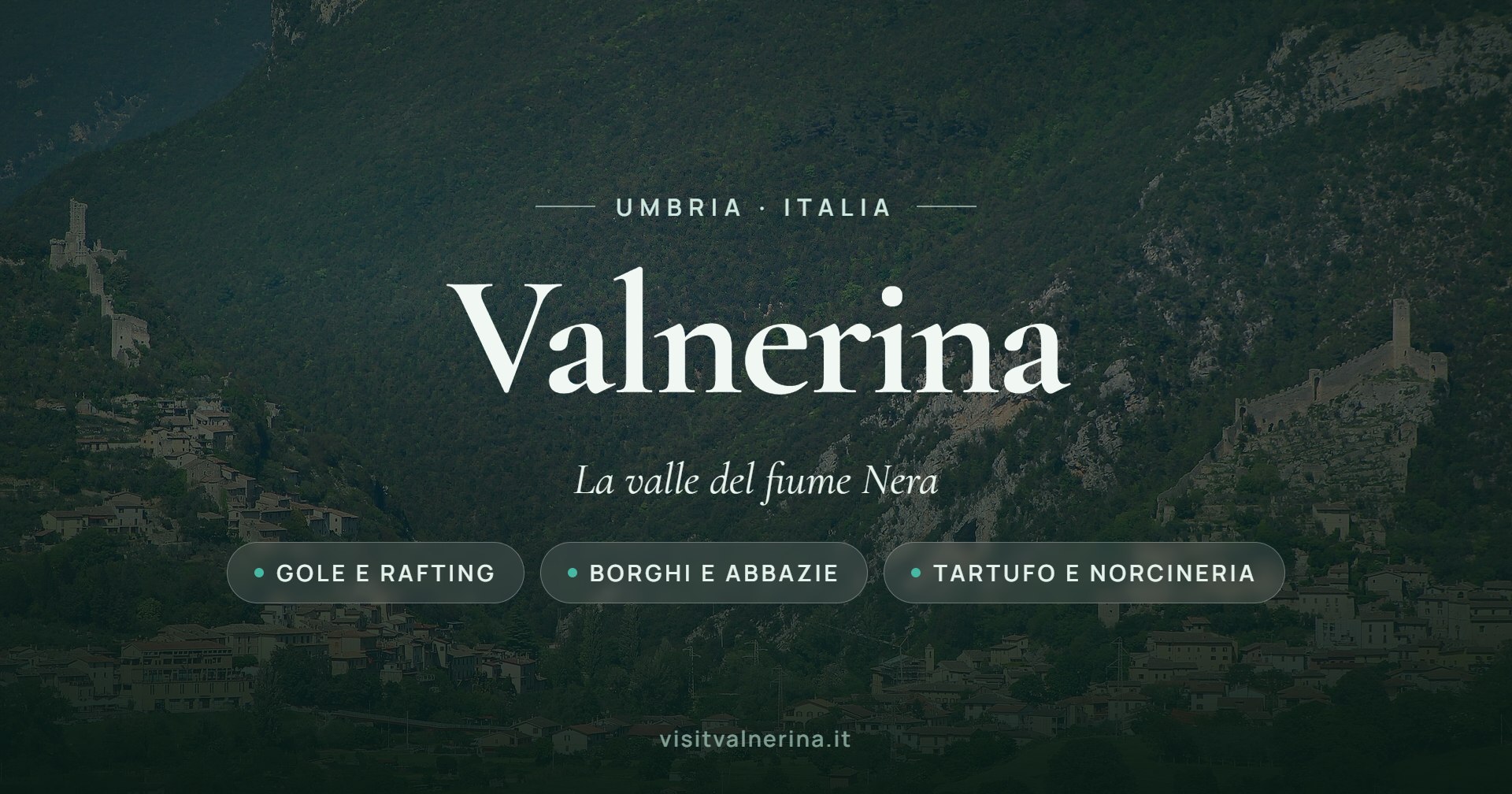
The shady valley of the Nera river, between Rome and the heart of Umbria: stone villages above the gorges, thousand-year-old abbeys, whitewater rafting and the flavours of Norcia.
Run a local business? Create your landing page on the SaaS platform →For millennia the Nera has flowed through the valley that bears its name: gorges cut into rock, woods descending to the rapids, villages born as river landings and fortresses watching the water. This is Umbria's liveliest realm of water.
Between Ferentillo and Arrone the Nera runs narrow between rock walls: the gorges that shaped and named the valley, crossed by trails, mule tracks and ancient bridges.
Some of Italy's most celebrated rapids: rafting, kayaking and canyoning with local guides on the green waters of the Nera, the river that made the valley Umbria's outdoor capital.
Mills, ironworks and paper mills lived for centuries on the current of the Nera: in Scheggino and all along the valley their memory still lingers between stone and water.
Local history and geography outreach: itineraries and river features are described in brief. The portal does not manage or sell sports activities, rentals or excursions: for water levels, prices and official information, refer to authorised guides and operators.
«Valnerina» appears on this page only as the historical and geographic name of the Nera valley: no reference is intended to homonymous commercial brands, which belong to their respective owners.
From the walls of Norcia to the shrine of Cascia, from villages perched above the river to the Castelluccio plains — with detours to Montefranco, Polino, Sant'Anatolia di Narco and Cerreto di Spoleto, all the way to the Marmore Falls and Lake Piediluco: ten stops to read the valley and its gateways.
The birthplace of the founder of Western monasticism: the Romanesque basilica raised on the saint's birthplace, inside the 14th-century walls of the town.
The highest village of the Umbrian Apennines overlooks the plateau where lentils are grown: between May and July, a sea of colours beneath Monte Vettore.
Basilica and shrine drawing pilgrims from all over the world, in a village perched on the mountains of the Corno valley, among medieval gates and stone alleys.
Two twin hamlets — Matterella and Precetto — at the foot of the medieval rock, where the Nera narrows into the valley's most scenic gorges.
The village of fishermen and trout, rebuilt after the sack of 1527: stone portals, intact alleys and the river flowing past its weirs.
The gateway to the valley: a castle of Lombard foundation above a bend of the Nera, with towers, alleys carved into the rock and views over the river.
Near Preci, the abbey founded by the followers of the hermit Eutizio: centuries of faith, scriptoria and surgery, in a wooded hollow between valley and mountain.
A walled village among the Borghi più Belli d'Italia, wedged between river and wood: tower-houses, portals and a church with 15th-century frescoes, gateway to the upper valley.
At the gates of the valley, the leap of the Velino into the Nera: 165 metres in three jumps, engineered by the Romans in 271 BC — Europe's tallest man-made waterfall, between trails and viewpoints.
The lake the Velino sets out from towards the falls: a fishing village mirrored on the water, between Monte Eco and dragon-boat races — the last gateway before Terni.
Founded by the Lombards of the Duchy of Spoleto on the remains of a Roman temple, wedged between river and rock: inside, one of Umbria's largest cycles of Romanesque frescoes tells of stone, silence and centuries.
Like the river, this page flows downstream: from the Piani di Castelluccio down to the Marmore Falls and Lake Piediluco, twelve stops lighting up one after the other, village after village. Follow the current.
At 1,452 metres, the highest village of the Umbrian Apennines overlooks the Piani: lentils, summer blooms and Monte Vettore above it all.
The birthplace of St. Benedict, born here around 480: the basilica on the saint's birthplace, the 14th-century walls and the norcineria that named Italy's pork butchers.
The city of St. Rita: basilica and shrine drawing pilgrims from all over the world, between medieval gates and the rose that tells her miracle.
The abbey founded by the hermit Eutizio's followers and the surgeons of Preci: centuries of faith, scriptoria and science in a wooded hollow.
The chief town of the upper valley between Nera and Corno: a stone borgo, medieval churches and, at Triponzo, spa waters steaming by the river.
A village halfway up the slope among chestnut and olive groves: the collegiate church of the Visitation on the hill, the borgo huddled around its castle.
Tower-houses and a hull of stone between river and wood: within the walls, among the Borghi più Belli d'Italia, 15th-century frescoes and silence.
The fishermen's village, rebuilt after the sack of 1527: weirs on the Nera, trout, stone portals and alleys smelling of firewood.
Matterella and Precetto beneath the fortress, between the valley's narrowest walls: a Lombard abbey, the Nera gorges and the curious mummies of Santo Stefano.
The river's gateway: the first village going up the Nera, founded by the Lombards, with Castel di Lago above the bend and alleys carved into the rock.
Where the Velino plunges into the Nera: 165 metres in three jumps, since 271 BC, when consul Curius Dentatus had the Curian channel cut to drain the marshes near Rieti — the valley's most celebrated entrance.
The basin the Velino sets out from towards the falls: a fishing village mirrored on the water, between Monte Eco, dragon-boat races and the sunsets that close the journey.
A calendar that runs through all the seasons: blooms on the plains, food festivals and irreverent races along the river. Dates and programmes are indicative and set year by year: always check the official channels.
The Piani di Castelluccio light up with the colours of lentils in flower: yellow, red and violet paint the most photographed plateau of the Apennines, beneath Monte Vettore.
The fair of black truffle and typical products: stalls, tastings and norcineria cuisine in the heart of the Umbrian winter, between cured meats, lentils and pecorino.
In Ferentillo they race with wheelbarrows and frogs in tow: an irreverent contest that fills the village's summer with music, taverns and the gorges of the Nera.
Itineraries, guides, events, promotions and services: content from the portal and the businesses of the Valnerina and Umbria.
16 Settembre 2026
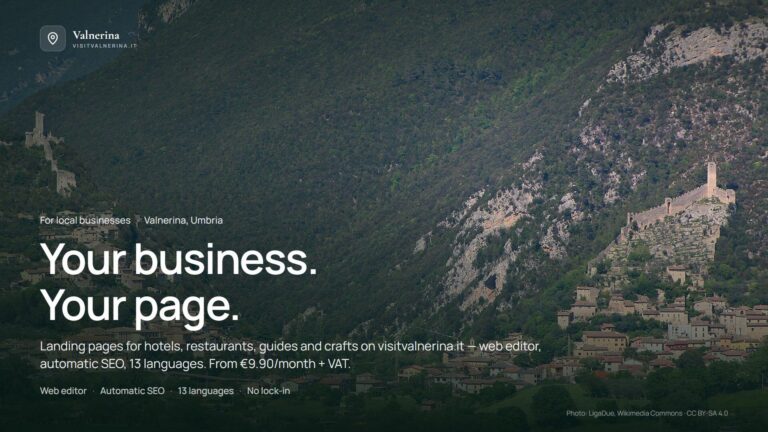
If you run a hotel, a restaurant, a guide service or a craft workshop in Valnerina and the surrounding area,...
Discover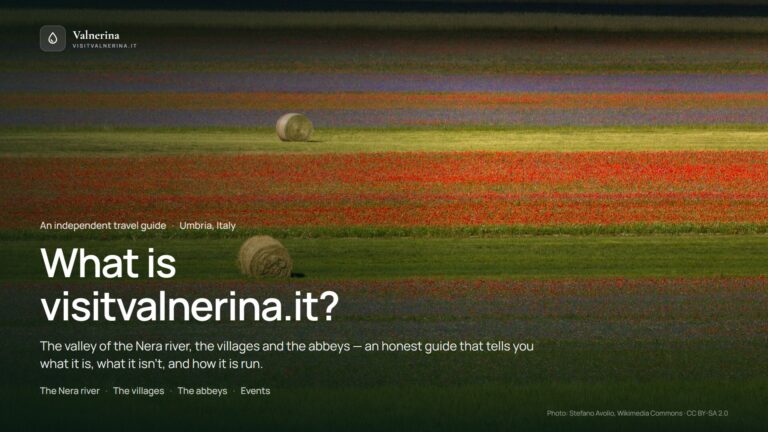
16 Settembre 2026
If you're planning a trip to Umbria and you've landed on this page, a fair question deserves a straight answer:...
DiscoverSign up, build your page with the web editor and publish articles, posts, services, offers and menus in front of those planning their visit. Automatic SEO, an interface in 13 languages, everything from the browser, no app.
A perfect base for exploring green Umbria, a short hop from Spoleto and Terni, with the Marmore Falls and Lake Piediluco at the gates of the valley.
Opening hours of places of interest and monuments change with the seasons: always check before you visit.